

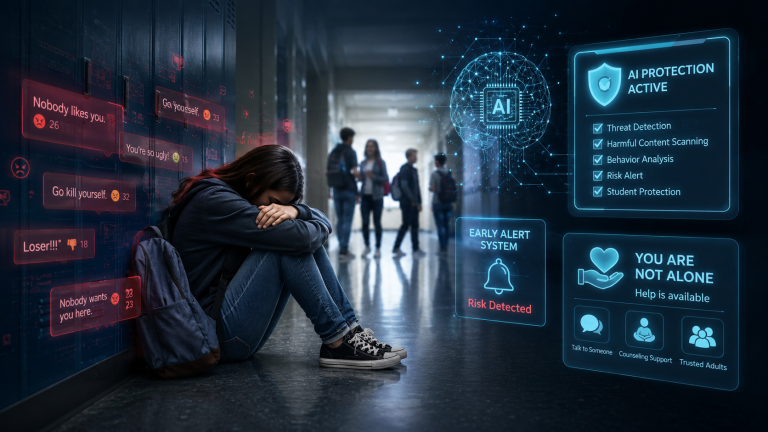
Bullying Is More Than “Kids Being Kids”
For many years, bullying was dismissed as a normal part of growing up. That idea is dangerous.
Bullying can include physical aggression, verbal insults, social exclusion, intimidation, humiliation, spreading rumors, and online harassment. According to the CDC, bullying can lead to social and emotional distress, physical injury, self-harm, depression, anxiety, sleep problems, lower academic achievement, and even dropping out of school.
The National Child Traumatic Stress Network also notes that bullying can affect a child’s self-image, relationships, school performance, and mental health, including risks of depression, anxiety, substance use, and suicidal thoughts.
That means bullying is not just a discipline issue. It is a safety issue. It is a mental health issue. And in many cases, it is a problem that requires fast adult intervention.
Why Bullying Is Hard to Detect
One of the hardest parts of preventing bullying is that it often happens when adults are not watching.
It can happen:
- in school hallways
- in bathrooms or locker rooms
- on playgrounds
- during lunch breaks
- on the way home
- inside group chats
- through anonymous social media accounts
- in gaming communities or online platforms
Many students do not report bullying because they feel embarrassed, afraid, or convinced that no one will help. Some worry that speaking up will make the bullying worse.
This silence is one of the biggest dangers. When bullying stays hidden, it can grow.
The Role of AI in Bullying Prevention
AI can help schools identify patterns that humans may miss.
For example, AI systems can be designed to detect signs of aggression, distress, harmful language, repeated harassment, or unsafe behavior. Some systems can analyze visual, audio, or text-based signals and send alerts to responsible adults when something seems wrong.
Cat’s Eye, for example, presents its anti-bullying system as a solution that receives audio and visual inputs, analyzes the data, detects violence, and sends an alert.
This kind of technology can support schools by creating faster awareness. Instead of waiting until a student finally reports a problem, AI can help identify concerning situations earlier.
AI and Cyberbullying
Cyberbullying is especially difficult because it can happen at any time of day.
A student may receive hateful messages late at night, be added to a group chat only to be mocked, or see humiliating content posted publicly. UNESCO has warned that digital devices have made cyberbullying worse, and that school violence, including bullying and cyberbullying, can have long-lasting effects on students’ safety, mental health, and education.
AI can help by scanning for patterns such as repeated insults, threats, humiliation, or harmful language. In some cases, AI tools may help students understand whether a message is a joke, conflict, or bullying behavior. Research has already explored how large language models may help students distinguish bullying from joking in peer interactions, although these tools must be carefully reviewed and designed to avoid bias or mistakes.
This is important: AI should not be treated as the final judge. It should be used as an early warning tool that helps trained adults respond more quickly.
AI Can Help, But It Must Be Responsible
AI in schools must be handled carefully.
A good anti-bullying system should protect students, not spy on them. It should support mental health, not create fear. It should help adults respond with care, not punish students automatically without context.
Schools using AI should think carefully about:
- student privacy
- consent and transparency
- how data is stored
- who receives alerts
- how false alarms are handled
- how students can ask for help
- how teachers and counselors respond after an alert
AI should be part of a larger safety culture. It works best when combined with trained teachers, clear anti-bullying policies, mental health support, parent communication, and a school environment where students feel safe speaking up.
The Human Side Still Matters Most
Technology can detect warning signs, but humans create safety.
A student who is being bullied does not only need an alert system. They need someone to listen. They need adults who believe them. They need protection from retaliation. They need emotional support after the incident is reported.
A student who bullies others also needs intervention. Bullying behavior often comes from anger, insecurity, learned aggression, family problems, social pressure, or a desire for control. Stopping bullying means addressing the behavior clearly while also understanding what caused it.
This is why the best solution is not AI alone. The best solution is AI plus human responsibility.
What Parents Can Do
Parents can play a major role in preventing and responding to bullying.
Look for changes such as:
- suddenly avoiding school
- losing interest in activities
- sleep problems
- mood changes
- unexplained injuries
- lower grades
- hiding their phone
- becoming anxious after using social media
- withdrawing from family or friends
If you notice these signs, start with calm questions. Instead of saying, “Are you being bullied?” try:
“What has school felt like lately?”
“Is there anyone making your day harder?”
“Do you feel safe around your classmates?”
“Has anything happened online that made you uncomfortable?”
The goal is to create enough safety for the child to speak honestly.
What Schools Can Do
Schools should not wait for bullying to become severe before acting.
They can:
- build clear reporting systems
- train staff to recognize bullying signs
- encourage positive bystander behavior
- create safe spaces for students
- respond quickly to reports
- involve parents when needed
- use technology to support detection
- provide counseling and emotional support
A strong school culture makes bullying harder to hide and easier to stop.
A Safer Future Is Possible
Bullying can make a child feel alone, powerless, and unsafe. But with the right combination of awareness, compassion, technology, and fast intervention, schools can create a different future.
AI can help detect danger earlier. It can help adults notice patterns. It can support cyberbullying prevention. It can give schools another layer of protection.
But the real goal is bigger than detection.
The goal is to make sure no child feels invisible.
The goal is to make sure students know that help is available.
The goal is to build schools where safety is not just a policy, but a daily experience.
AI can be part of that future — not by replacing human care, but by helping it arrive sooner.