

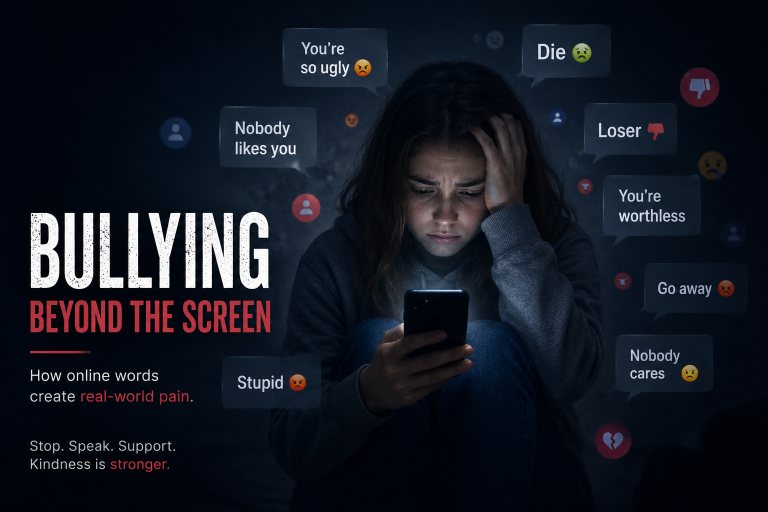
In the age of smartphones, social media, and constant connectivity, bullying has evolved into something far more complex than playground teasing or schoolyard conflicts. Today, a single post, comment, screenshot, or viral trend can expose someone to public humiliation on a global scale within minutes.
While technology has connected billions of people, it has also created new environments where harassment, exclusion, and cruelty can thrive. From cyberbullying and online shaming to cancel culture and digital pile-ons, the ways people experience bullying have changed dramatically—and society is still struggling to keep up.
As conversations around mental health continue to grow, understanding the modern reality of bullying has become more important than ever.
Bullying Has Gone Digital
Traditionally, bullying was often limited by time and place. A student could leave school and find some relief at home. An employee could finish a workday and step away from workplace conflicts.
Today, that boundary barely exists.
Social media platforms, messaging apps, online communities, gaming environments, and anonymous forums have created a world where harassment can follow people everywhere.
A negative comment posted at midnight can still be waiting when someone wakes up.
A rumor shared in a private group can spread across multiple platforms within hours.
An embarrassing photo can remain searchable for years.
The internet has transformed bullying from a temporary experience into something that can feel permanent.
Why Online Bullying Feels Different
Many people assume online bullying is less harmful because it doesn’t involve physical confrontation.
In reality, the opposite can often be true.
Online harassment frequently creates a unique combination of factors:
Unlimited Audience
Instead of being witnessed by a few people, humiliation can be viewed by thousands—or even millions.
Permanent Records
Posts, screenshots, videos, and messages can continue circulating long after the original incident.
Constant Exposure
Victims often feel there is no safe space because their phones and social accounts are part of everyday life.
Anonymity
People are often more aggressive online when they believe their identity is hidden.
Viral Amplification
Algorithms can unintentionally reward outrage and controversy by increasing visibility.
Together, these factors can make digital bullying feel overwhelming and inescapable.
The Rise of “Pile-On Culture”
One of the most concerning online trends is what psychologists and digital culture researchers often describe as a “pile-on.”
A pile-on occurs when large numbers of people direct criticism, insults, ridicule, or harassment toward a single individual.
Sometimes the target has genuinely made a mistake.
Sometimes they are simply misunderstood.
Sometimes they have done nothing wrong at all.
The problem is that once a crowd begins attacking someone online, individual responsibility often disappears.
People write comments they would never say face-to-face because they feel protected by the size of the crowd.
What begins as criticism can quickly turn into harassment.
Cancel Culture and Public Shaming
Another modern phenomenon closely related to bullying is public shaming.
Social media has given ordinary users unprecedented power to hold individuals accountable for harmful actions. In many cases, this accountability can be valuable.
However, public accountability and public humiliation are not always the same thing.
A growing concern among researchers is the speed at which online communities move from criticism to dehumanization.
People can become defined by a single mistake, a poorly worded post, or an event taken out of context.
The result is often an environment where fear replaces dialogue and outrage replaces understanding.
While accountability matters, societies must also consider proportionality, forgiveness, and the possibility of growth.
The Mental Health Crisis Behind Online Harassment
Mental health professionals have increasingly linked cyberbullying with serious psychological consequences.
Victims frequently report:
- Anxiety
- Depression
- Loneliness
- Sleep disruption
- Low self-esteem
- Panic attacks
- Social withdrawal
- Academic or professional decline
For teenagers and young adults, whose identities are still developing, these effects can be particularly severe.
Several studies have found that individuals who experience persistent online harassment are significantly more likely to report symptoms associated with depression and emotional distress.
The digital world may be virtual, but the emotional damage is very real.
Why Social Media Algorithms Matter
A conversation about modern bullying cannot ignore algorithms.
Most social platforms are designed to maximize engagement.
Unfortunately, outrage often generates more engagement than kindness.
Controversial content tends to attract:
- More comments
- More shares
- More reactions
- Longer viewing times
This can unintentionally amplify hostile interactions.
While platforms continue to invest in moderation tools and safety features, critics argue that engagement-driven systems sometimes reward the very behaviors they claim to discourage.
As technology evolves, the responsibility for reducing online bullying cannot rest solely on users. Platform design also plays a crucial role.
Gaming Communities and Digital Harassment
Online gaming has become one of the largest entertainment industries in the world.
For millions of people, games provide community, friendship, and competition.
However, toxic behavior remains a major challenge.
Players frequently encounter:
- Verbal abuse
- Personal attacks
- Discrimination
- Targeted harassment
- Threats
Competitive environments can sometimes encourage aggressive behavior, especially when anonymity reduces accountability.
Many gaming companies are now investing heavily in AI-powered moderation systems designed to identify and remove abusive behavior before it escalates.
Artificial Intelligence: Part of the Problem or Part of the Solution?
As AI becomes more integrated into digital platforms, it is beginning to play a role in addressing bullying.
Modern moderation systems can:
- Detect hate speech
- Identify harassment patterns
- Flag threatening messages
- Reduce harmful content visibility
However, AI moderation is not perfect.
Algorithms can miss context, misunderstand sarcasm, or incorrectly flag harmless content.
The challenge moving forward is finding a balance between protecting users and preserving open communication.
Nevertheless, AI is likely to become one of the most important tools in the fight against large-scale online harassment.
What Can Parents and Educators Do?
Technology evolves quickly, but human support remains essential.
Parents and educators should focus on:
Encouraging Open Conversations
Young people are more likely to seek help when they know they won’t be judged.
Teaching Digital Citizenship
Understanding how online actions affect real people is a critical life skill.
Monitoring Without Spying
Building trust is often more effective than constant surveillance.
Recognizing Warning Signs
Changes in mood, withdrawal from social activities, declining academic performance, or unusual anxiety around devices can sometimes indicate online harassment.
What Can Individuals Do?
Whether you’re a student, professional, content creator, or social media user, there are practical ways to reduce harm.
Think Before Posting
Ask yourself whether a comment contributes to a conversation or simply adds negativity.
Avoid Participating in Digital Mobs
A viral controversy rarely needs another insult.
Report Harassment
Most platforms now offer tools for reporting abusive behavior.
Support Targets of Harassment
A private message of support can make a significant difference to someone experiencing online attacks.
Curate Your Digital Environment
Mute, block, and filter features exist for a reason. Protecting your mental health is not weakness.
The Future of Online Culture
The internet has given humanity extraordinary opportunities to connect, learn, and create.
Yet it has also revealed how easily technology can amplify our worst impulses.
The next chapter of digital culture will not be defined solely by faster networks, smarter AI, or new platforms.
It will be defined by whether we learn to build healthier online communities.
The challenge is not technological.
It is human.
Conclusion
Bullying is no longer confined to classrooms or playgrounds. It now exists in comment sections, group chats, gaming lobbies, livestreams, and social media feeds that millions of people interact with every day.
As online spaces become an increasingly important part of modern life, addressing digital bullying is no longer optional—it is a social necessity.
Technology may have changed the tools of bullying, but it has also given us new opportunities to create safer, more empathetic communities.
The question is not whether online culture will continue to evolve.
The question is what kind of culture we choose to build.